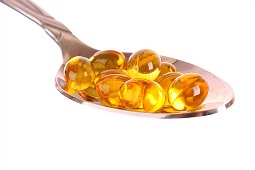
Is there mercury in fish oil? How do you know the fish oil you're taking is really free of mercury, PCB's, lead and other contaminants? Is it better to eat fish or take fish oil supplements?
We all know how fish is good for us and we should try to eat 2 - 3 servings of fish per week. Fish is a rich source of omega 3 fatty acids and these special fats play a direct role in preventing cardiovascular disease.
The problem with eating fish is it may contain high levels of mercury, called methylmercury. Methylmercury is toxic and is absorbed into the fish from the water they swim in. Fish can also consume mercury from eating other fish.
Scientists have found that larger fish higher up in the food chain (shark and swordfish) have higher tissue concentrations of mercury (1 µg per gram of fish weight). Smaller fish, such as tuna, trout, pike and bass have lower levels of 0.1 - 0.5 µg/gram.
Research shows there's a direct correlation between how much fish you eat and your relative mercury levels in your body. Eating certain kinds of fish may expose your body to excessive mercury levels and other contaminants.
Studies found that excessive mercury levels may promote atherosclerosis and free radical damage. Doctors have advised pregnant women to limit their intake of fish to avoid exposing their unborn babies to mercury. There's also the concern of PCB's, lead and other contaminants from eating fish.
Symptoms of mercury poisoning include itching, burning, skin discoloration, kidney dysfunction, loss of memory and profuse sweating. In the case of pregnant mothers, mercury exposure can affect your baby's brain and nervous system.
Normal mercury levels in people that don't eat fish is about 2.0 micrograms per Liter (µg/L).
People that eat 2 - 4 servings of fish per week may have mercury levels up to 8.4 µg/L.
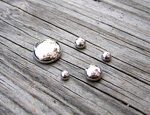
Mercury is a natural element in our world. We're normally exposed to very low levels of mercury on a day-to-day basis. This silver colored substance is found in small amounts in many rocks. Natural background levels of mercury can be found in the air, soil and water.
Dentists used to use mercury in dental fillings, but this practise is declining due to a decrease in tooth decay and the appearance of better substitute materials.
Other sources of mercury are thermostats, thermometers and flourescent lamps.
Did you know that you can get mercury from nasal sprays and eye drops? I was surprised to learn this after reading the FDA database of mercury levels in drugs and other biologic products.
Although there are natural sources of mercury, extraneous forms of mercury are released into the environment from burning coal for fuel, waste incineration and smelting mines.
Dozens of factories throughout the world could be unwittingly releasing excessive mercury into the environment, indirectly increasing mercury levels in fish and other wildlife.
This raises the concern of eating fish that may increase our intake of mercury. There's no doubt that eating fish offers us many health benefits. The omega 3 fatty acids are proven to improve cardiovascular health along with many other benefits.
So how do we get the health benefits of fish, while avoiding unnecessary exposure to mercury?
Researchers believe taking concentrated fish oil supplements may be the key to getting the healthful omega 3 fatty acids from fish, while avoiding exposure to excessive levels of mercury.
The big question is:
Is there mercury in fish oil and how much is a safe level?
It so happens some doctors at Harvard Medical School asked the same question. They recently tested the amount of mercury in 5 different brands of fish oil bought from health food stores and the internet.
The 5 brands analyzed included:
The capsules were punctured and liquid contents were sent for mercury level analysis. Mercury levels lower than 6 ug/L. would be labeled as insignificant levels.
Results showed none of the 5 brands contained significant amounts of mercury.
Nordic Naturals Ultimate Omega, Sundown, and Kirkland brands all showed zero levels of mercury (below 6 ug/L). The Omega Brite brand had 12 µg/L of mercury and the CVS brand contained 10 µg/L.
Researchers concluded:
The study also shows that even large doses of concentrated fish oils should not cause mercury toxicity.
For example, researchers found that six 1000 mg. Omega Brite fish oil capsules contains 0.072 µg of mercury. This is equivalent to 2.1% of the mean daily mercury intake in the typical North American population.
Using pharmaceutical-grade fish oils helps you avoid any potential exposure to mercury, PCB's, lead and other contaminants.
Some manufacturers use FDA-registered laboratories to test for mercury and other contaminants. Others use third-party laboratories to test their products for purity.
My favorite resource for checking mercury content, purity and quality levels of fish oils is the International Fish Oil Standards (IFOS).
The IFOS is an independent lab that routinely tests a variety of fish oil supplements following very strict standards set forth by the World Health Organization (WHO) and the Council of Responsible Nutrition.
If you're looking for the lowest levels of mercury in fish oils, you should only use fish oils recommended by the IFOS. I believe this is the most trusted source for non-biased testing and analysis of commercial grade fish oils for human consumption.
One such brand that made the 'cut' is the high quality fish oils offered by Dr. Barry Sears.
Dr. Sears created a specialized high-dose fish oil
called Zone Labs Omega 3 Concentrates.
Third-party lab results have shown Dr. Sears Zone Labs Omega 3 Fish Oil Concentrates have the highest concentration of omega 3 fatty acids - compared to any store-bought brand of fish oil. These pharmaceutical-grade oils also received high marks in the IFOS fish oils report.
Avoiding mercury in fish oils is very simple when you know which is the best product to use. Try doing some research on the company behind the product you're interested in using. This will go a long way in helping you avoid mercury in fish oils and getting the highest quality products for your health and well-being.
Click the banner below for more detailed information on Dr. Sears patented, pharmaceutical-grade fish oils:
Mercury, fish oils, and the risk of myocardial infarction. New England Journal of Medicine 2002;347:1747–1754. Guallar E, Sanz-Gallardo MI, van't Veer P. et al.
Blood mercury levels in US children and women of childbearing age 1999–2000. JAMA 2003;289:1667–1674. Schober SE, Sinks TH, Jones RL. et al.
Measurement of Mercury Levels in Concentrated Over-the-Counter Fish Oil Preparations: Is Fish Oil Healthier Than Fish? Archives of Pathology and Laboratory Medicine: Vol. 127, No. 12. S. Foran, J. Flood, K. Lewandrowski
Mercury and fish oil supplements. MedGenMed 2001;3:20 Schaller JL
Intake of mercury from fish, lipid peroxidation, and the risk of myocardial infarction and coronary, cardiovascular, and any death in eastern Finnish men. Circulation 1995;91:645–655. Salonen JT, Seppanen K, Nyyssonen K. et al.