Health Benefits of Lauric Acid from Coconut Oil
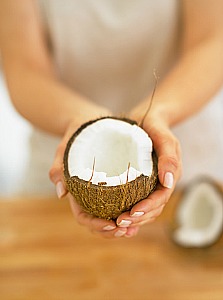
Lauric acid in coconut oil has health benefits
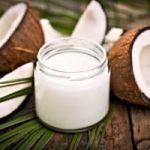
Coconut oil has grown in popularity as a nutritious oil that can be used to improve skin health and condition dry hair.
Along with it being an excellent cooking oil due to it’s high heat point, this tropical plant oil contains one of the highest sources of a medium chain fatty acid called lauric acid.
Some coconut oils may contain up to 40 – 50% of lauric acid and research has shown it has powerful antimicrobial properties.
But what are the health benefits of lauric acid and can you simply eat coconut oil to benefit from it’s germ-fighting properties?
Introducing the Doctor of Fats: Dr. Jon Kabara
Dr. Kabara was a Professor at both Universities of Detroit and Michigan.
He has published numerous studies on the anti-microbial effects of fatty acids and was credited for discovering the antiseptic properties of lauric acid.
Lauric acid is known in the pharmaceutical industries as an antimicrobial. You may have heard of its cousin, Sodium Lauryl Sulphate (SLS), which is commonly used in soaps and shampoos for its ability to remove fats (grease) with water.
Dr. Kabara research uncovered that lauric acid converts into a mono-glyceride called Monolaurin.
Research papers show that Monolaurin and lauric acid have anti-viral and antibacterial properties.
Viruses inactivated by Monolaurin:
- Measles virus
- Herpes Simplex virus (HSV 1 and 2)
- Measles virus
- Herpes Simplex virus (HSV 1 and 2)
- HIV
- Hepatitis C
- Cytomegalovirus (CMV)
Bacteria affected by Monolaurin:
- Listeria Monocytogenes – This nasty bug causes Listeriosis, a serious infection you can get from eating contaminated food. It can be killed by pasteurizing or cooking food but you can still get it from eating contaminated, ready-to-eat foods like hot dogs and deli meats.
- Staphylococcus Aureus – This bacteria causes Toxic Shock Syndrome, cellulitis, boils, scalded skin syndrome, impetigo, and other infections. Most healthy people carry this bacteria in their noses. It can cause infections if it gets into an open wound or skin puncture. Hand-washing is one of the most important ways to avoid infections.
How does Monolaurin destroy virus and bacteria?
It works by liquifying the fatty membrane of the virus which causes it to disintegrate; and it disrupts how bacteria form toxins which weakens their toxic effect.
Studies also show that Monolaurin is effective against Gram-negative and Gram-positive bacteria, as well as fungi and viruses.
Additionally, research is now focusing on the potential anti-cancer effects of lauric acid, particularly in both breast and endometrial cancer cells.
Can Eating Coconut Oil Actually Help Your Body Kill Germs?
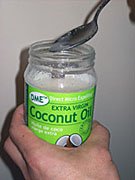
It turns out that a good quality virgin coconut oil can contain up to 40-50% lauric acid. As previously mentioned, the only other natural source is found in mother’s milk.
So if you eat coconut oil, will you get the same immune-boosting effects that mothers pass onto their babies with breast milk?
Unfortunately, Dr. Kabara’s research showed that the immune-boosting effects of lauric acid in coconut oil is only seen when the lauric acid is broken down into monoglycerides before you digest them.
When a baby consumes mother’s milk, the milk contains an enzyme that breaks down the lauric acid into Monolaurin; this process provides the baby with the immune-boosting properties.
Unfortunately, virgin coconut oil doesn’t have this specific enzyme available so when you eat coconut oil, you don’t get any immune-enhancing effect.
And to add insult to injury, further studies show your body can only get 1 – 6% Monolaurin from any available lauric acid in the coconut oil.
It turns out that the enzymatic conversion also depends on the total amount of lauric acid found in the coconut oil you’re eating.
So eating lower quality coconut oils with reduced amounts of lauric acid will be even less effective.
Dr. Kabara believes you need at least 3 – 9 grams of Monolaurin per day for an effective antiviral and antimicrobial effects.
This means you would need to eat about 300 – 900 ml. of coconut oil per day. That’s a lot of coconut oil to digest and you’d probably get an upset stomach or diarrhea from eating this much oil.
So what’s the best way to optimize your intake of lauric acid?
The Best Way to Supplement with Lauric Acid
Fortunately, there are other food sources where you can get higher amounts of lauric acid; either through functional whole foods or specialized supplementation.
Jennies Macaroons
This product is lactose-free, gluten-free, sulphite-free, wheat-free and no trans fats. Not only do these coconut treats taste great, you also get a healthy dose of lauric acid.
Another effective source is through specialized nutritional supplements.
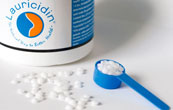
Realizing the potential for Monolaurin, Dr. Kabara invented a supplement form called Lauricidin.
This cutting-edge product is a potent form of Monolaurin that’s easily digested and used by your body. It comes as tiny little pellets of lauric acid mixed with glycerin.
Lauricidin Pure Monolaurin
Apparently it’s highly recommended by health care professionals for its effectiveness.
For more information on the research side of Lauric acid, visit Lauric.org. It provides the latest information on clinical research and studies using Lauric acid against Lipid Coated Viruses (LCVs) such as HIV, Measles virus, Herpes virus, and the Cytomegalovirus.
Research References:
Fatty Acids and Derivatives as Antimicrobial Agents Antimicrobial Agents and Chemotherapy 2(l):23-28 (1972) Kabara. J.J.. Conley. A J.- Swieczkowski. D M. Ismail, I.A . Lie Ken Jie and Gunstone, F D Antimicrobial Action of Isomeric Fatty Acids on Group A Streptococcus Journal of Medicinal Chemistry 16:1060-1063 (1973).
Antimicrobial Lipids: Natural and Synthetic Fatty Acids and Monoglycerides. Kabara. J.J., Vrable, R. and Lie Ken Jie, M.S.F Lipids 12:753759 (1977).
Toxicological, Bactericidal and Fungicidal Properties of Fatty Acids and Some Derivatives Kabara, J.J. JAOCS 56:760-767
Lauric oils as antimicrobial agents: theory of effect, scientific rationale, and dietary applications as adjunct nutritional support for HIV-infected individuals in Nutrients and Foods in AIDS (RR Watson, ed) CRC Press, Boca Raton, 1998, pp. 81-97. Enig, MG
Glycerol monolaurate inhibits the effects of Gram-positive select agents on eukaryotic cells. Biochemistry. 2006 Feb 21;45(7):2387-97. Peterson ML, Schlievert PM
In vitro activity of lauric acid or myristylamine in combination with six antimicrobial agents against methicillin-resistant Staphylococcus aureus (MRSA). International Journal of Antimicrobrial Agents. 2006 Jan;27(1):51-7. Epub 2005 Nov 28. Kitahara T, Aoyama Y, Hirakata Y, Kamihira S, Kohno S, Ichikawa N, Nakashima M, Sasaki H, Higuchi S.
Glycerol monolaurate inhibits virulence factor production in Aacillus anthracis. Antimicrobial Agents and Chemotherapy. 2005 Apr;49(4):1302-5. Vetter SM, Schlievert PM.
Effect of glycerol monolaurate on bacterial growth and toxin production. Antimicrobial Agents Chemotherapy. 1992 Mar;36(3):626-31. Schlievert PM, Deringer JR, Kim MH, Projan SJ, Novick RP.
In vitro and in vivo evaluations of the activities of lauric acid monoester formulations against Staphylococcus aureus. Antimicrobial Agents Chemotherapy. 2005 Aug;49(8):3187-91. Rouse MS, Rotger M, Piper KE, Steckelberg JM, Scholz M, Andrews J, Patel R.
Antimicrobial activity of monocaprin: a monoglyceride with potential use as a denture disinfectant. Acta Odontol Scand. 2006 Feb;64(1):21-6. Thorgeirsdottir TO, Kristmundsdottir T, Thormar H, Axelsdottir I, Holbrook WP.
Development of a virucidal cream containing the monoglyceride monocaprin. Pharmazie. 2005 Dec;60(12):897-9. Thorgeirsdottir TO, Hilmarsson H, Thormar H, Kristmundsdottir T.
Stable concentrated emulsions of the 1-monoglyceride of capric acid (monocaprin) with microbicidal activities against the food-borne bacteria Campylobacter jejuni, Salmonella spp., and Escherichia coli. Applied Environmental Microbiology. 2006 Jan;72(1):522-6. Thormar H, Hilmarsson H, Bergsson G.
Killing of Gram-positive cocci by fatty acids and monoglycerides. APMIS. 2001 Oct;109(10):670-8. Bergsson G, Arnfinnsson J, Steingrimsson O, Thormar H.
In vitro susceptibilities of Neisseria gonorrhoeae to fatty acids and monoglycerides. Antimicrobial Agents and Chemotherapy. 1999 Nov;43(11):2790-2. Bergsson G, Steingrimsson O, Thormar H.
In vitro inactivation of Chlamydia trachomatis by fatty acids and monoglycerides. Antimicrobial Agents and Chemotherapy. 1998 Sep;42(9):2290-4. Bergsson G, Arnfinnsson J, Karlsson SM, Steingrimsson O, Thormar H.
 at Amazon.com”
Home Page > Coconut Oil Home Page > Lauric Acid